How Do You Know When a Team Has Lost Hope?
Dr. Charles Castillo
Mental Resilience Counseling | THE P.H.O.E.N.I.X. MODEL™

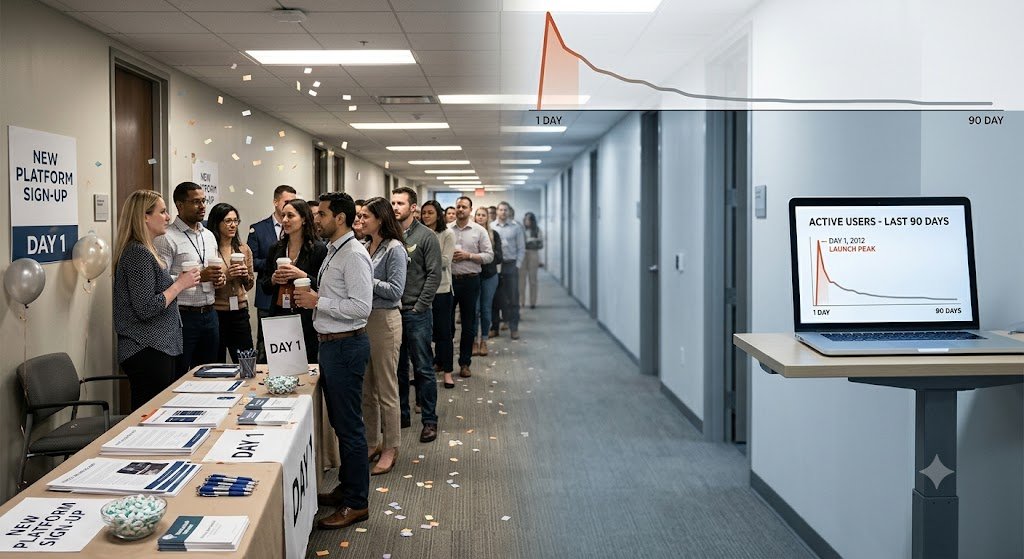
Teams do not usually announce that they have lost hope. More often, leaders feel it before they can name it. Meetings become flatter. Questions become narrower. Initiative shrinks. People stop thinking beyond what is immediately required. The team may still be working, still delivering, still showing up, but something important is no longer present in the same way. The future no longer feels emotionally alive inside the room. That is often one of the clearest signs that hope has weakened.
This matters because hope is not the same as morale. A team can have a decent mood on a given day and still lack hope. Hope has more to do with direction, believable future movement, and the sense that continued effort still leads somewhere meaningful. When teams lose that connection, they often become more mechanical. They conserve energy. They limit risk. They think shorter term. Over time, the absence of hope starts to show up in the kinds of things leaders usually measure later: lower engagement, weaker collaboration, slower recovery, and rising turnover risk. Gallup reporting on declining engagement and struggling managers supports the broader point that when emotional connection weakens, performance systems begin to thin out as well. (Wall Street Journal)
One sign a team has lost hope is that it stops imagining a better near future. The language shifts from possibility to endurance only. People speak mostly in terms of surviving, getting through, or avoiding further difficulty. Another sign is emotional narrowing. Teams with hope can still carry hard things, but they tend to retain some curiosity, contribution, and belief that effort matters. Teams without hope often look more dutiful than invested. They do what must be done, but with less visible conviction.
Drawing from the PHOENIX Model, Dr. Charles Castillo identifies Anchored Hope as a clinical resilience factor influencing engagement, endurance, and workplace stability. That idea becomes especially useful at team level. A team loses hope when the shared connection to a meaningful future becomes weak, blurry, or emotionally unconvincing. At that point, pressure starts to feel heavier, not only because the work is hard, but because fewer people still feel anchored to where the work is going.
Leaders do not need to wait for crisis to recognize this. They can notice whether the team still has language for purpose, whether people still believe in progress, whether effort still feels connected to something worth carrying, and whether managers are engaged enough to keep people emotionally oriented. If not, the problem may be deeper than fatigue. It may be that the team is no longer carrying the future together. Gallup’s research on manager training and engagement underscores how much that leadership layer affects the team’s ability to stay connected. (Wall Street Journal)
The Anchored Hope Index™ offers a structured way for teams and organizations to reflect on future orientation, meaning, resilience, support, and drift risk before the weakening of hope becomes visible only through more expensive outcomes.
If you want a more structured way to understand whether your team is tired, strained, or beginning to lose its connection to a meaningful future, the Anchored Hope Index™ offers a thoughtful place to begin.
Educational Use Disclaimer: The Anchored Hope Index™ is an educational and organizational development tool intended to support reflection, awareness, and discussion. It is not a diagnostic, clinical, or mental health assessment instrument and should not be used as a substitute for professional mental health evaluation or treatment.
References:Gallup findings on declining engagement and manager strain, as reported by The Wall Street Journal and Axios. (Wall Street Journal)Gallup reporting on thriving, stress, and team conditions in remote capable work, as reported by Houston Chronicle. (Houston Chronicle)