What Causes People to Lose Their Sense of Direction in High Pressure Roles?
Dr. Charles Castillo
Mental Resilience Counseling | THE P.H.O.E.N.I.X. MODEL™
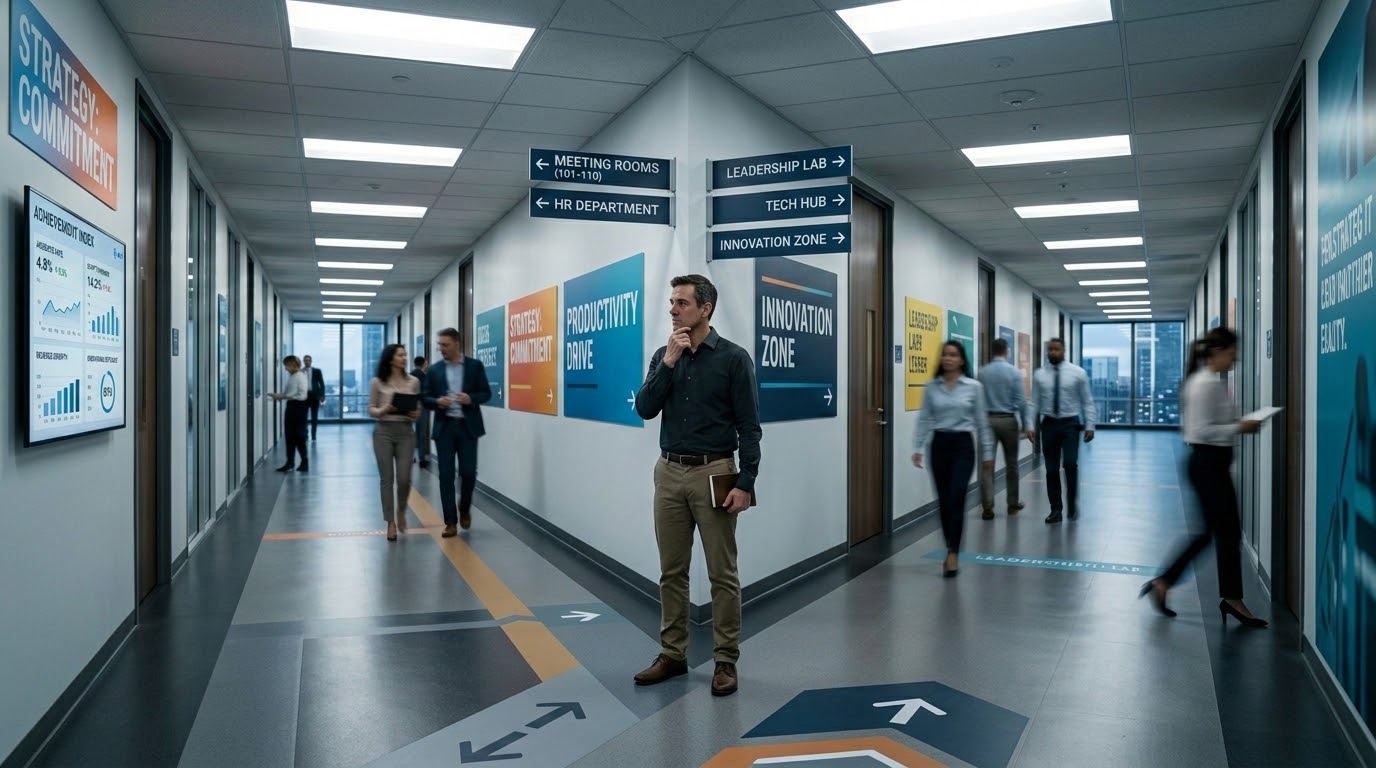
People do not usually lose their sense of direction all at once. More often, it happens gradually. In high pressure roles, the demands are immediate, the pace is relentless, and the horizon gets crowded by what feels urgent. Over time, a person can become highly active while feeling less and less oriented. They are still moving, still producing, still responsible. But they are no longer as connected to where they are going or why the effort still matters. That kind of disorientation is often missed because organizations tend to reward motion even when meaning is thinning out underneath it. (Wikipedia)
One cause is prolonged pressure without enough recovery or reflection. When people spend too long reacting, they begin to lose access to the broader view that helps effort feel coherent. Another cause is emotional overload. If stress accumulates faster than steadiness can be restored, the future can start to feel emotionally distant. The person becomes increasingly absorbed by the next demand, the next problem, the next deadline. They may still be effective, but not deeply oriented. In that state, work starts to feel like management of burden rather than movement toward something meaningful. (Wikipedia)
A weakening sense of purpose also plays a major role. Recent work on meaning and purpose at work argues that workers value purpose alongside income, and that meaning can shape effort and performance in significant ways. Even without resolving every academic debate, the practical conclusion is clear: when people feel less purpose in what they are doing, direction becomes harder to sustain. A role can remain demanding and outwardly successful while inwardly becoming harder to inhabit. (arXiv)
Support from leadership matters too. Gallup reporting has repeatedly emphasized that managers influence engagement, clarity, and team stability. When managers are undertrained, overloaded, or disengaged themselves, employees often lose a key source of grounding. Direction is not just an internal feeling. It is reinforced by conversations, expectations, support, and the sense that someone is helping connect the present load to a meaningful future. (Business Insider)
Drawing from the PHOENIX Model, Dr. Charles Castillo identifies Anchored Hope as a clinical resilience factor influencing engagement, endurance, and workplace stability. That perspective is especially useful here. In high pressure roles, people often lose direction not because they are lazy or incapable, but because their connection to a meaningful future has weakened under sustained strain. When that happens, effort can remain high while inner orientation becomes blurry. The person is still active, but less anchored.
That is why leaders should pay attention not only to performance, but to future connection. Does the person still feel that what they are doing is leading somewhere meaningful? Do they still feel agency, purpose, and emotional reason to continue? If not, the issue may be more than stress. It may be a drift in direction itself. (Wikipedia)
The Anchored Hope Index™ helps individuals and organizations reflect on meaning, future orientation, resilience, support, and drift risk before that loss of direction hardens into disengagement, burnout, or turnover.
If you want a more structured way to understand whether pressure is causing people to lose not just energy, but direction, the Anchored Hope Index™ offers a thoughtful place to begin.
Educational Use Disclaimer: The Anchored Hope Index™ is an educational and organizational development tool intended to support reflection, awareness, and discussion. It is not a diagnostic, clinical, or mental health assessment instrument and should not be used as a substitute for professional mental health evaluation or treatment.
References:World Health Organization, “Burn-out” as chronic workplace stress not successfully managed. (Wikipedia)Research on purpose and meaning at work. (arXiv)Gallup workplace reporting on manager engagement and employee stability. (Business Insider)