What Is the Cost of Burnout Beyond Absenteeism?
Dr. Charles Castillo
Mental Resilience Counseling | THE P.H.O.E.N.I.X. MODEL™
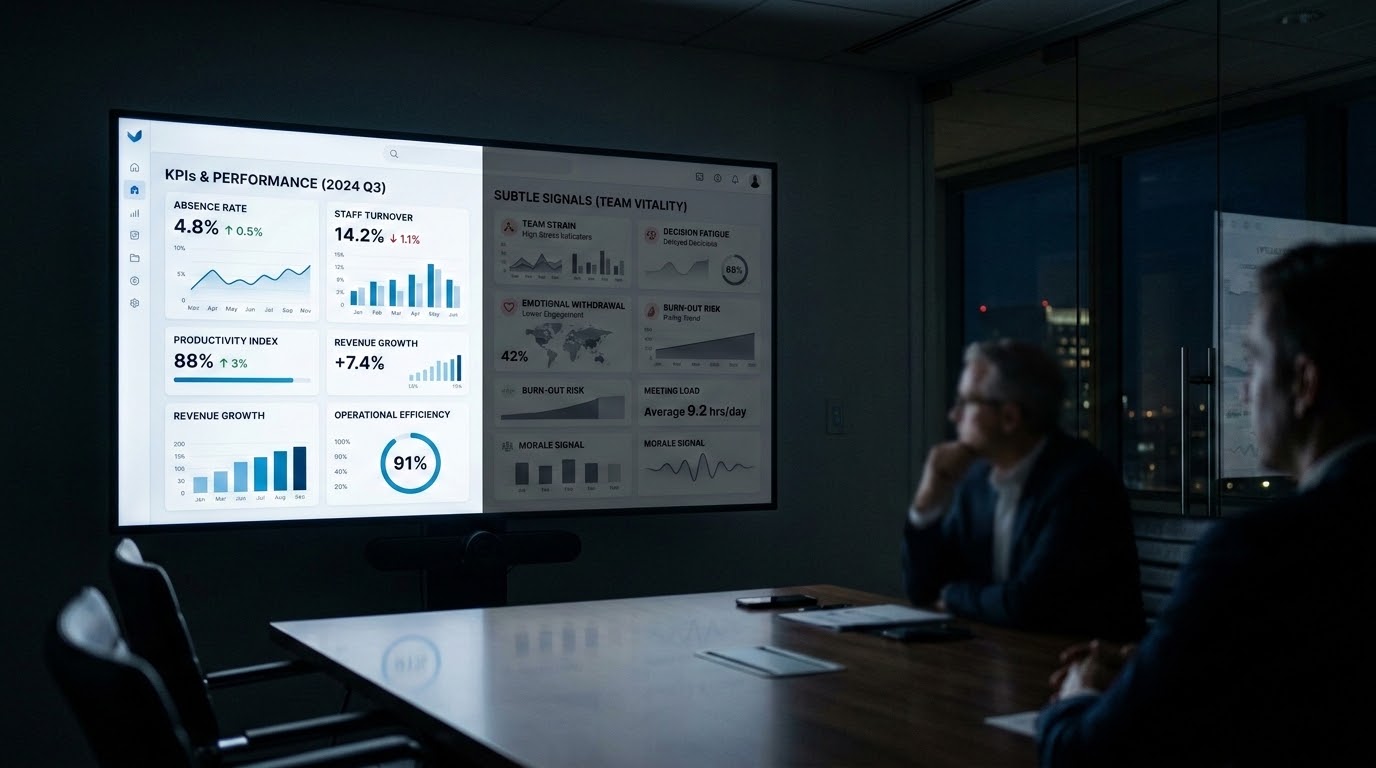
When organizations talk about burnout, they often start with the easiest number to see: absenteeism. Missed days are concrete. They show up in reports. They create visible operational gaps. But absenteeism is only one part of the cost, and often not the most expensive part. The World Health Organization describes burn-out as an occupational phenomenon resulting from chronic workplace stress that has not been successfully managed, marked by exhaustion, increased mental distance or cynicism, and reduced professional efficacy. That means burnout affects not only whether someone is present, but how they function when they are present. (World Health Organization)
That is why the true cost of burnout often hides inside ordinary looking workdays. A burned out employee may still log in, still attend meetings, and still complete key tasks. But their patience may be thinner, their judgment less steady, and their emotional bandwidth more fragile. The result is often slower thinking, lower creativity, weaker collaboration, less discretionary effort, and more reactive decision making. Burnout becomes expensive not only when people are absent, but when they are present without the same clarity, resilience, or connection they once brought to the work. (World Health Organization)
This is where the cost starts to spread. Managers under strain become less effective stabilizers. Teams communicate more transactionally. Conflict becomes easier to trigger and harder to repair. A strong employee who used to lift others begins to conserve energy instead. Gallup’s workplace research has tied disengagement to large scale productivity loss globally, which reinforces a simple point: the price of human disconnection is rarely contained to one person. It ripples outward through morale, execution, culture, and trust. (Wall Street Journal)
Burnout also raises the risk of quiet attrition long before formal turnover happens. People do not always leave immediately. Sometimes they detach first. They reduce initiative. They stop thinking long term. They perform more mechanically. That state can look manageable from the outside, but it weakens continuity and increases the odds that the organization will eventually lose talent it thought was stable. Even early research linking work exhaustion with voluntary turnover points in this direction: exhaustion and dissatisfaction often sit upstream of the decision to leave. (arXiv)
There is also the cost of error. Under extended strain, fatigue related impairment can affect cognitive functioning in ways serious enough that NIOSH compares prolonged wakefulness to alcohol related impairment in some contexts. While that finding comes from sleep deprivation research rather than burnout alone, it underscores the broader leadership issue: when people are depleted, performance risk is not only emotional. It can become operational, safety related, and financially consequential. (CDC)
Drawing from the PHOENIX Model, Dr. Charles Castillo identifies Anchored Hope as a clinical resilience factor influencing engagement, endurance, and workplace stability. That is an important distinction, because burnout is often discussed only as overload. But overload alone does not fully explain why one person remains connected under pressure while another becomes emotionally flat, mechanically productive, or quietly detached. The deeper cost may include the weakening of meaning, future orientation, and internal reason to continue. When those erode, the business feels it through lower steadiness, weaker retention, and reduced performance continuity. This article reflects that PHOENIX perspective while keeping the Anchored Hope Index in its intended role as an educational and organizational development tool.
So what is the cost of burnout beyond absenteeism? It is the cost of thinner judgment. Lower trust. Reduced initiative. Weaker leadership presence. Quiet disengagement. Delayed recovery. Preventable turnover. Operational drag. Burnout costs more than the days people miss. It also costs organizations what happens on the days people show up without the same internal connection, energy, and steadiness that meaningful work requires. (World Health Organization)
The Anchored Hope Index™ is designed to help individuals and organizations reflect on meaning, future orientation, resilience, and drift risk before these hidden costs harden into visible damage. It does not diagnose burnout. It helps surface whether pressure is beginning to weaken the deeper human connection that supports endurance, engagement, and workplace stability.
If you want a more structured way to see hidden burnout risk before it shows up as disengagement, turnover, or performance drag, the Anchored Hope Index™ offers a thoughtful place to begin.
Educational Use Disclaimer: The Anchored Hope Index™ is an educational and organizational development tool intended to support reflection, awareness, and discussion. It is not a diagnostic, clinical, or mental health assessment instrument and should not be used as a substitute for professional mental health evaluation or treatment.
References:World Health Organization, “Burn-out an occupational phenomenon.” (World Health Organization)CDC NIOSH, training material on fatigue related cognitive impairment. (CDC)Gallup reporting on employee engagement, disengagement, and manager strain. (Wall Street Journal)